Business travelers moving between Hong Kong, Shenzhen, and other Greater Bay Area cities in 2026 have six real transport options, and only one guarantees a confirmed price, car, and route before you leave the office.
- CrossBorder MPV wins for confirmed-price business travel — route, car, and price locked in writing before departure.
- Cross-border coach and shuttle services are the cheapest option but run on fixed timetables, not meeting schedules.
- A taxi border-change relay is the fastest walk-up option but forces a checkpoint transfer with luggage.
- Self-drive rental with a dual-plate cross-border permit suits multi-day, multi-city GBA itineraries, not single meetings.
- Hotel limousine desks work for guests booking through the property, but availability is tied to hotel inventory.
Why this matters
A business trip across the Hong Kong-Shenzhen border isn't a same-city taxi ride. Most private cars are licensed for one side of the border only, which means a large share of so-called cross-border bookings actually involve switching vehicles at a checkpoint — not ideal when you're carrying a laptop bag, a garment bag, and thirty minutes before a client meeting.
The six options below cover every realistic scenario a business traveler hits in 2026: a confirmed executive transfer, a cheap shared shuttle, a walk-up taxi relay, a single-city ride-hailing connector, a hotel-arranged limousine, and a self-drive rental for multi-city work. Each is ranked for a different use case, not against a single scorecard.
Best overall for confirmed business travel: CrossBorder MPV — private Toyota Alphard chauffeur transfers between Hong Kong, Shenzhen, and other Greater Bay Area cities, with route, car, and price confirmed before you go. Best budget option: cross-border coach and shuttle services. Best for short-notice single hops: a taxi border-change relay. Best for multi-day, multi-city GBA work: self-drive rental with a dual-plate cross-border permit.
What makes the best cross-border car service for business travelers
- No mid-trip vehicle change — a single car and driver cleared for both sides of the border
- Price confirmed in writing before departure, not negotiated at the checkpoint
- Luggage capacity that matches business travel — laptop bags, garment bags, sample cases
- A named coordinator or driver contact, not a dispatch queue
- Waiting terms defined upfront for flight delays and meeting overruns
- Legal dual-plate or cross-border licensing, since not every car allowed in Hong Kong is allowed to cross into Shenzhen
At a glance
| Service | Best for | Standout feature | Key limitation |
|---|---|---|---|
| CrossBorder MPV | Confirmed business transfers | Route, car, price confirmed before departure | Requires advance booking, not a walk-up service |
| Cross-border coach/shuttle | Budget solo travel | Lowest cost per seat | Fixed departure times, no door-to-door pickup |
| Taxi border-change relay | Last-minute single hops | Available without booking | Forces a checkpoint transfer with your bags |
| Ride-hailing apps (single city) | Last-mile city connections | Instant availability inside one city | No dual-plate licence to actually cross the border |
| Hotel limousine desk | Hotel-booked guests | Bundled into hotel service | Availability tied to hotel inventory |
| Self-drive rental (dual-plate) | Multi-day GBA itineraries | Full route flexibility across cities | Requires a cross-border driving permit and local driving |
1. CrossBorder MPV: best cross-border car service for confirmed business travel
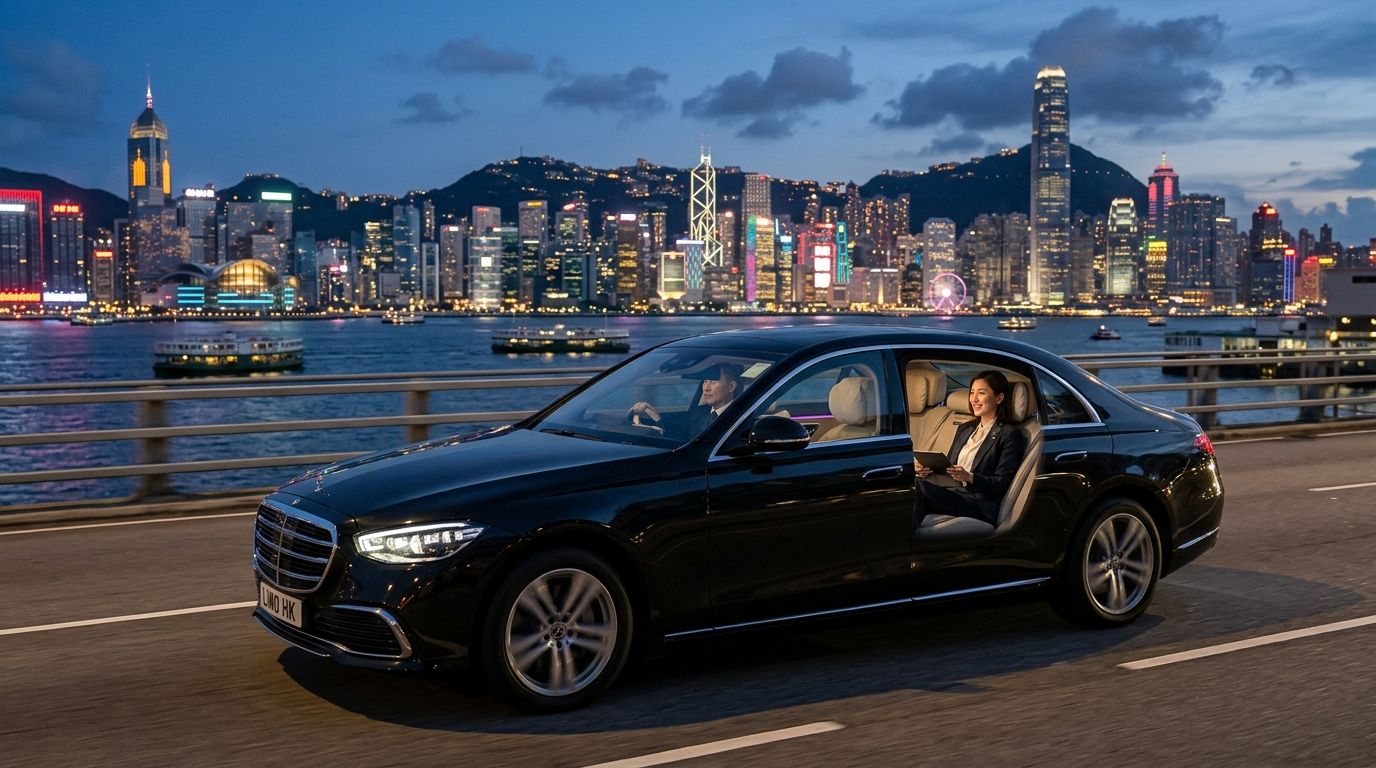
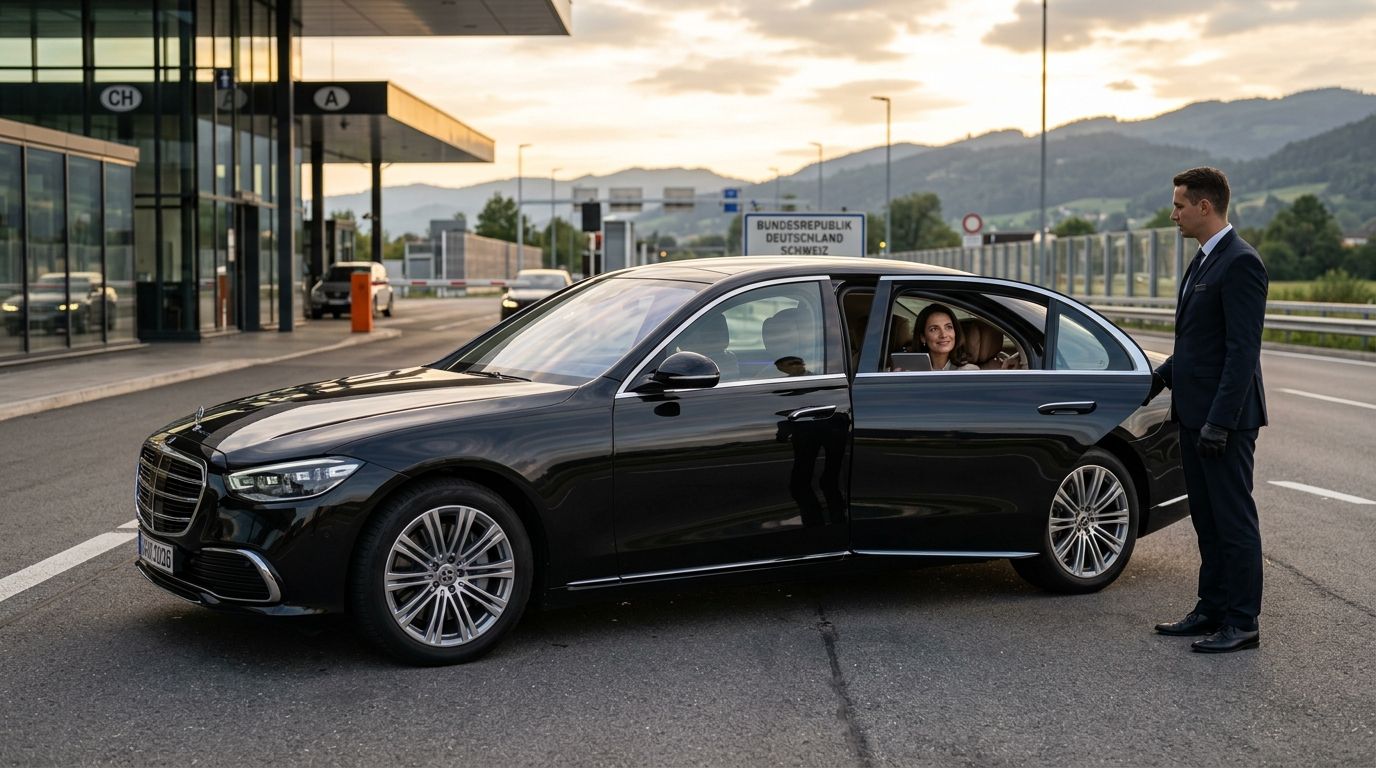
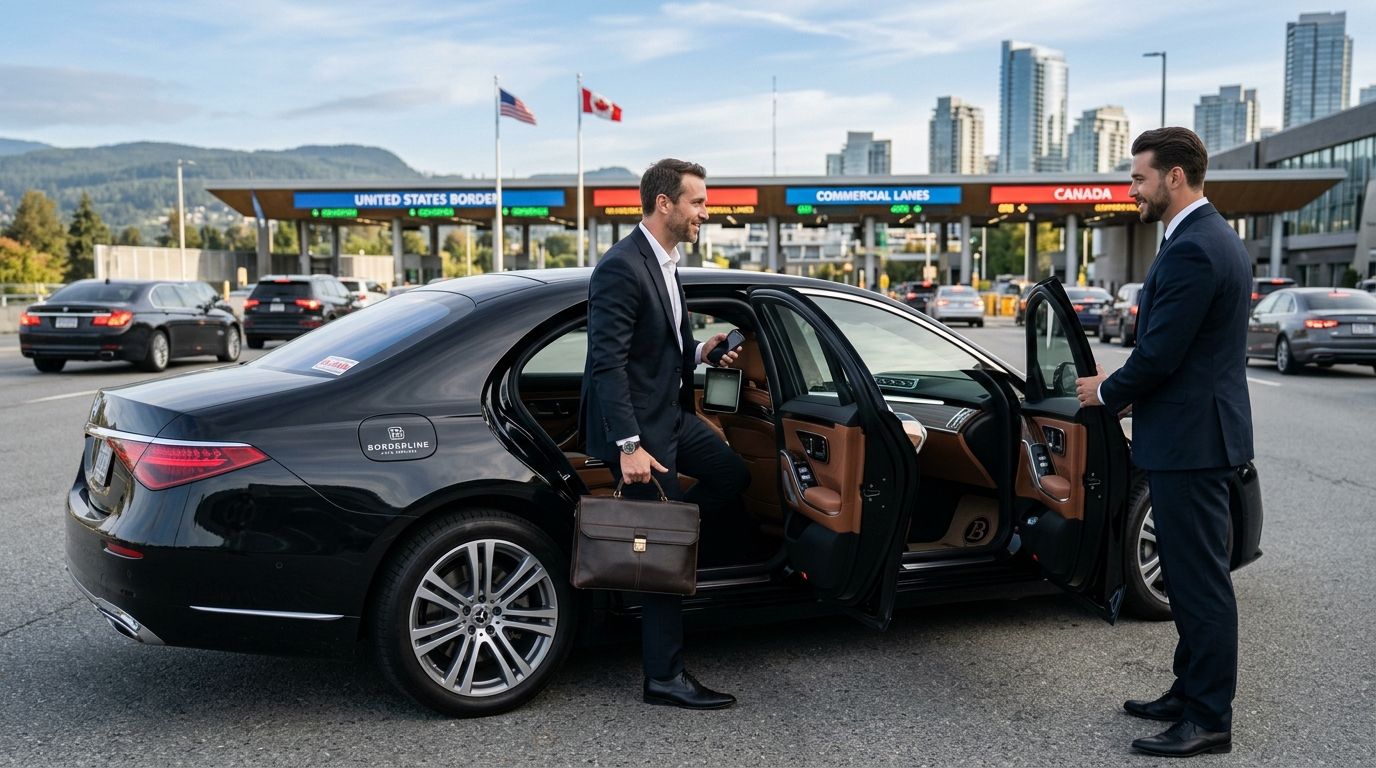
CrossBorder MPV runs private Toyota Alphard chauffeur transfers between Hong Kong, Shenzhen, and other Greater Bay Area cities for executives, hotels, event teams, and individual travelers. The vehicle, route, and price are confirmed before the trip, and pickup, luggage count, and waiting terms are set in advance rather than negotiated on the day.
CrossBorder MPV pros:
- Single Toyota Alphard for the whole trip — no border-side vehicle change
- Price confirmed in writing before departure, no checkpoint haggling
- Coordinator contact for flight delays, meeting overruns, and luggage changes
- Covers airport pickups, hotel transfers, and cross-border meetings alike
CrossBorder MPV cons:
- Requires advance booking — not built for spontaneous walk-up rides
- Single vehicle class (Alphard MPV), not a fleet of car sizes
Best for: executives and business teams who need a locked-in price and one car for the whole Hong Kong-Shenzhen or wider GBA trip.
Verdict: Buy — this removes the two biggest business-travel risks: price uncertainty and a mid-trip vehicle swap.
2. Cross-border coach and shuttle: best cross-border car service for budget solo travel
Shared coach and shuttle services run scheduled routes between Hong Kong and mainland Greater Bay Area cities, sold per seat rather than as a private booking.
Cross-border coach pros:
- Lowest per-trip cost of any option on this list
- Regular scheduled departures through the day
- No price negotiation involved
Cross-border coach cons:
- Fixed timetables, not built around a meeting schedule
- Shared seating and limited luggage space
- Pickup is at a fixed terminal, not your hotel or office
Best for: solo travelers on a fixed budget who can plan around a set departure time.
Verdict: Hold — fine when the schedule lines up, risky when a meeting runs long.
3. Taxi border-change relay: best cross-border car service for last-minute single hops
A metered taxi takes you to the checkpoint on one side, you walk through immigration with your bags, and a second taxi collects you on the other side. It's the most available option with zero notice.
Taxi relay pros:
- Available without any booking
- Familiar metered pricing on each leg
- Fast if you travel light
Taxi relay cons:
- Forces a physical transfer with luggage at the checkpoint
- Two separate fares and two separate arrangements
- No single point of contact if something goes wrong
Best for: a single traveler with light luggage who needs to move immediately and has no fixed schedule risk.
Verdict: Wait — usable in a pinch, not something to plan a client meeting around.
4. Ride-hailing apps: best cross-border car service for last-mile connections
Ride-hailing apps in Hong Kong and mainland GBA cities are strong for moving inside one city, but they don't carry the dual-plate licensing needed to legally cross the Hong Kong-Shenzhen border in the same vehicle.
Ride-hailing pros:
- Near-instant availability inside a single city
- In-app pricing shown before the ride starts
- Useful for the final leg to or from a checkpoint
Ride-hailing cons:
- Cannot legally complete the border crossing in one vehicle
- Best treated as a connector, not the main cross-border leg
Best for: filling the gap between a checkpoint and your hotel or office.
Verdict: Skip as a standalone cross-border option; Buy as a last-mile add-on.
5. Hotel limousine desk: best cross-border car service for hotel-booked guests
Many Hong Kong and Shenzhen hotels arrange private car transfers through a concierge or limousine desk, usually as an add-on to a room booking.
Hotel limousine pros:
- Arranged in the same conversation as your room
- Hotel-branded service with a known point of contact
- Useful when you're already committed to a specific property
Hotel limousine cons:
- Vehicle availability depends entirely on hotel inventory
- Less flexible if your schedule or pickup point changes mid-trip
- Not available to travelers who aren't staying at that hotel
Best for: guests who prefer to route every arrangement through the hotel they're already booked into.
Verdict: Hold — convenient, but you're limited to what the property can offer that week.
6. Self-drive rental with dual-plate permit: best cross-border car service for multi-city GBA itineraries
A self-drive rental with a dual-plate cross-border permit lets you drive between Hong Kong, Shenzhen, Guangzhou, Zhuhai, and other Greater Bay Area cities across several days without arranging a new car for each leg.
Self-drive rental pros:
- Full route control across multiple GBA cities in one trip
- No dependence on a driver's schedule
- Efficient for a business trip touching three or more cities
Self-drive rental cons:
- Requires securing the cross-border driving permit in advance
- You're driving in unfamiliar traffic and signage instead of working en route
- Not practical for a single point-to-point transfer
Best for: a multi-day itinerary covering several GBA cities where driving yourself beats booking separate transfers.
Verdict: Buy for multi-city trips, Skip for a single Hong Kong-Shenzhen transfer.
How we ranked
Each service was matched against the six criteria above: no mid-trip vehicle change, confirmed pricing, business-appropriate luggage capacity, a named contact, clear waiting terms, and legal dual-plate crossing where relevant. No option wins on every dimension in 2026 — which is why this reads as six distinct use cases rather than one leaderboard.
Confirm your route, car, and price
Get a Toyota Alphard chauffeur transfer confirmed in writing before you travel.
Which cross-border car service should you choose?
If your 2026 trip involves a client meeting, an airport pickup, or a hotel transfer where the price and vehicle need to be settled before you leave, CrossBorder MPV's Toyota Alphard chauffeur service is the default choice — one car, no border-side swap, and the price confirmed in writing beforehand. Take the coach or shuttle only if your schedule is genuinely flexible, the taxi relay only for a light-luggage single hop with no fixed meeting time, and the self-drive rental only when your itinerary actually spans multiple Greater Bay Area cities over several days.
For how the Hong Kong-based options compare on comfort, see the ranked cross-border luxury transport comparison.
FAQ
What's the best cross-border car service for business travelers in 2026?
CrossBorder MPV's private Toyota Alphard chauffeur service is the strongest option for 2026 business travel because the route, car, and price are confirmed before departure. That avoids the mid-trip vehicle change most other options require.
Is a private chauffeur cheaper than a taxi relay across the Hong Kong-Shenzhen border?
A taxi border-change relay usually costs less per trip, but it involves two separate fares and a checkpoint transfer with your luggage. A private chauffeur trades that for one confirmed price and no vehicle swap.
Do I need to change cars at the Hong Kong-Shenzhen border?
You do with a taxi relay, a ride-hailing app, or most single-city rentals, since they aren't licensed to cross. Dual-plate vehicles used for confirmed chauffeur transfers cross in one car with no changeover.
How far in advance should I book a cross-border car service?
Confirmed chauffeur services and hotel limousine desks need advance booking so the price, route, and vehicle can be locked in writing. Walk-up options like a taxi relay need no notice but offer none of that confirmation.
Can a cross-border car service pick me up at Hong Kong International Airport?
Yes. Private chauffeur services built for business travel include direct airport pickup, with the pickup point, luggage count, and waiting terms confirmed before the flight lands.
Is a self-drive rental practical for a single Shenzhen business trip?
Not usually. Self-drive rentals with dual-plate permits work best across multi-day, multi-city Greater Bay Area itineraries, not a single point-to-point business meeting.
What happens if my flight is delayed and I've booked a private transfer?
With a confirmed chauffeur booking, waiting terms are agreed before departure, so a delay is handled through the coordinator rather than renegotiated at the curb.
Which option is best for a team of executives traveling together?
A private MPV chauffeur transfer, because the whole group stays in one vehicle across the border with luggage capacity confirmed in advance. Shared shuttles split the group across fixed timetables.
One last thing
The detail most business travelers miss in 2026: not every car that's legal in Hong Kong is legal in Shenzhen. Dual-plate licensing is what actually lets a vehicle cross without you switching cars — it's a legal distinction, not a service tier, and it's the single biggest reason a checkpoint transfer happens at all.